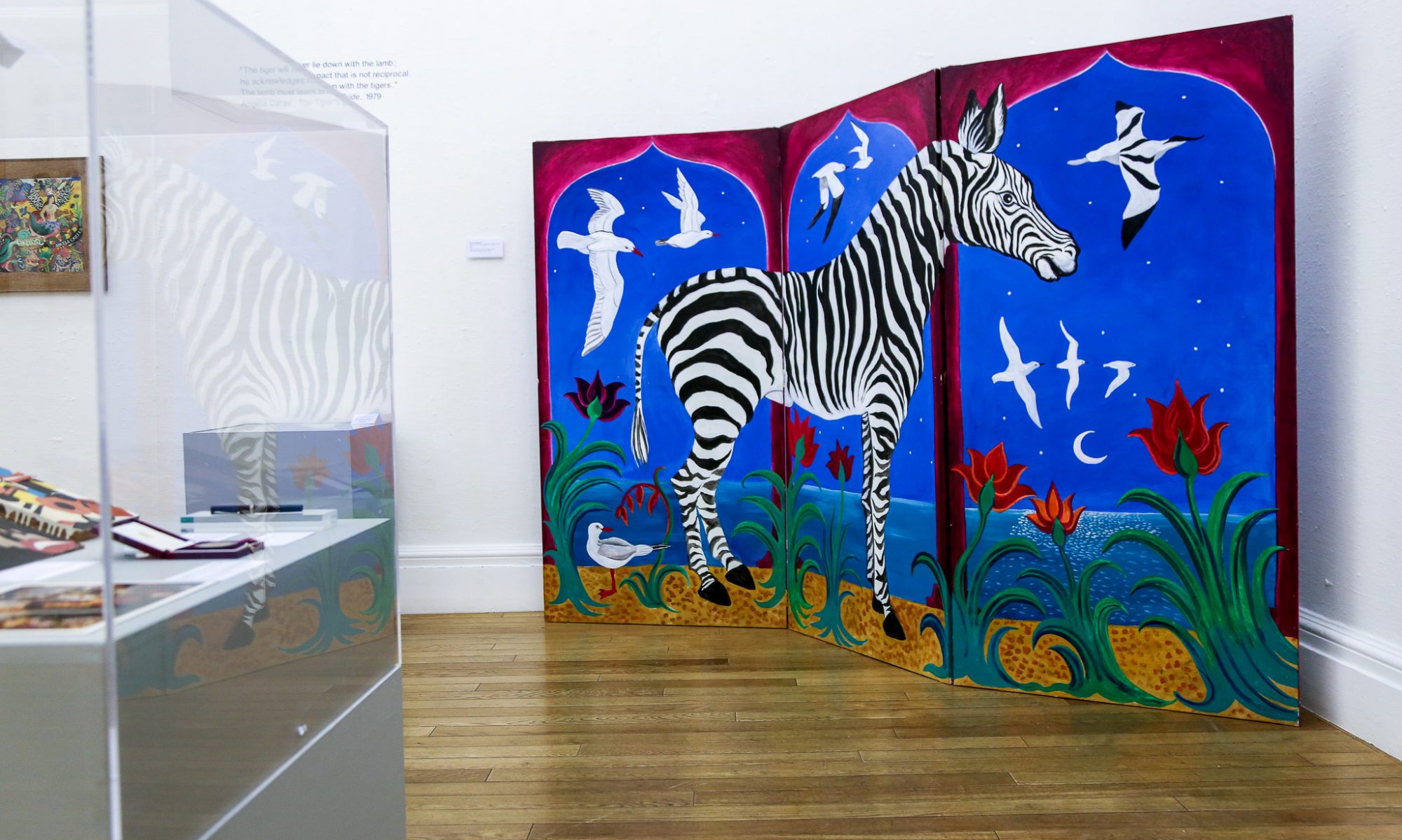
The winners of the 2026 Angela Carter Society Awards were announced at the Angela Carter Society Conference in Szeged, Hungary on 16 May 2026.
Best Chapter/Journal Article
Natsumi Ikoma (2020) ‘Underneath a Mishima-esque mask: Angela Carter’s posthumanism and postwar Japan’s empty power’, in Sarah Gamble and Anna Watz (eds.), Angela Carter’s Pasts: Allegories and Intertextualities (Bloomsbury, 2025)
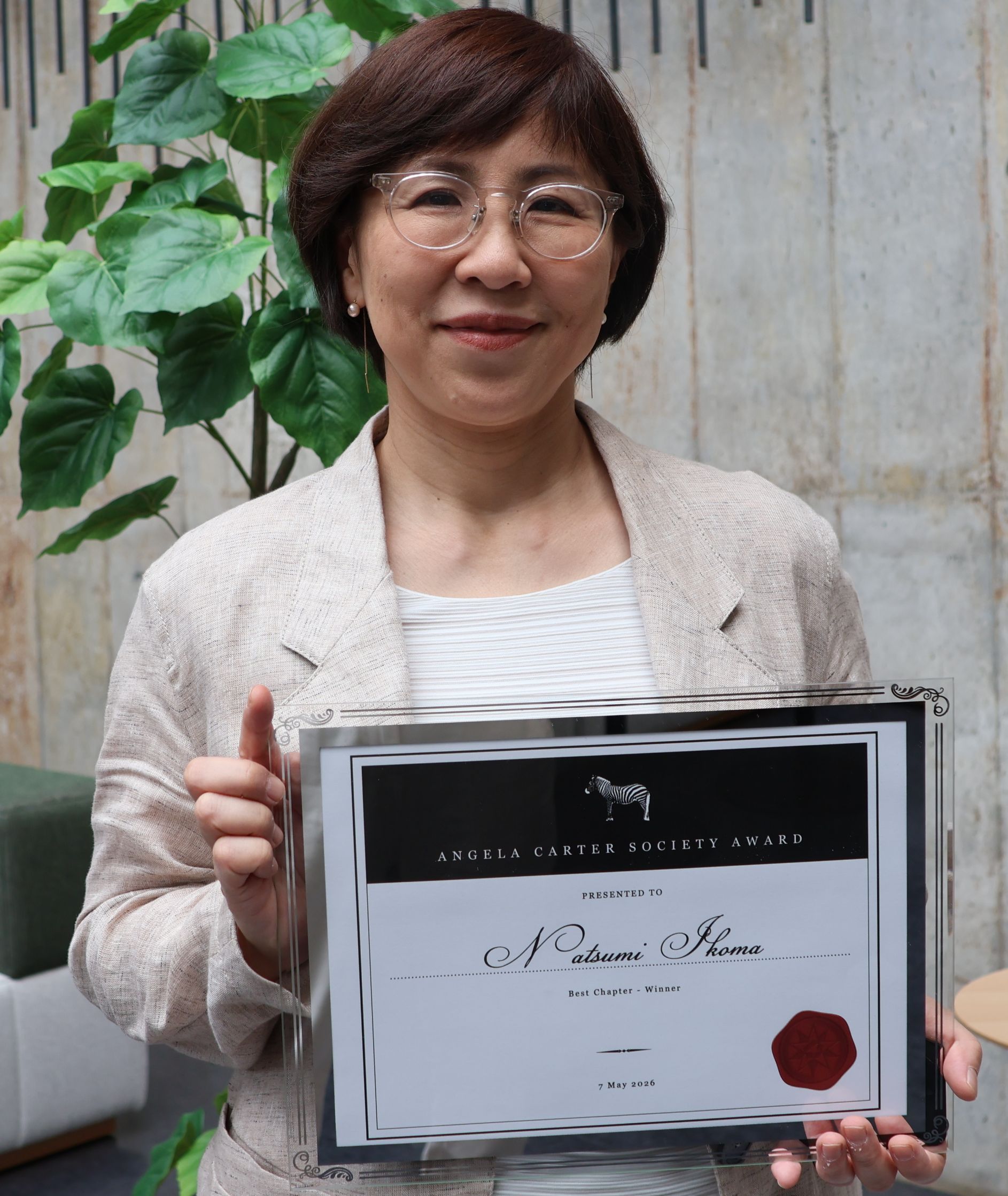
The judges praised Natsumi Ikoma’s essay for its depth of critical analysis and its sustained focus on carefully selected twinned texts, noting in particular how effectively it bridged literary discussion with autobiographical, mythical, theoretical, political, and historical concerns. They especially admired the way Ikoma’s essay celebrated Angela Carter’s work by illuminating its radically deconstructive and reconstructive aims through the trope of the mask. The judges found this approach original and remarked that it fundamentally altered their own reading of “The Executioner’s Daughter.” They highlighted the essay’s compelling analysis of differing concepts of the mask, linked to contrasting Occidental and Oriental perspectives, Japanese history, constructions of the body and the state, and to Mishima’s right-wing politics and devotion to the samurai tradition. Written with exceptional clarity and argued with precision and insight, the judges felt it stood out decisively as the winning entry and described it as a genuine pleasure to read.
Best Student Essay
Sarah Featonby, ‘Our Sisters, Our Shelves: Cultural Work as Sistership Work and ‘Fairy Godmother’ Carter’, in Sarah Gamble and Anna Watz (eds.), Angela Carter’s Futures: Representations, Adaptations and Legacies (Bloomsbury, 2025)
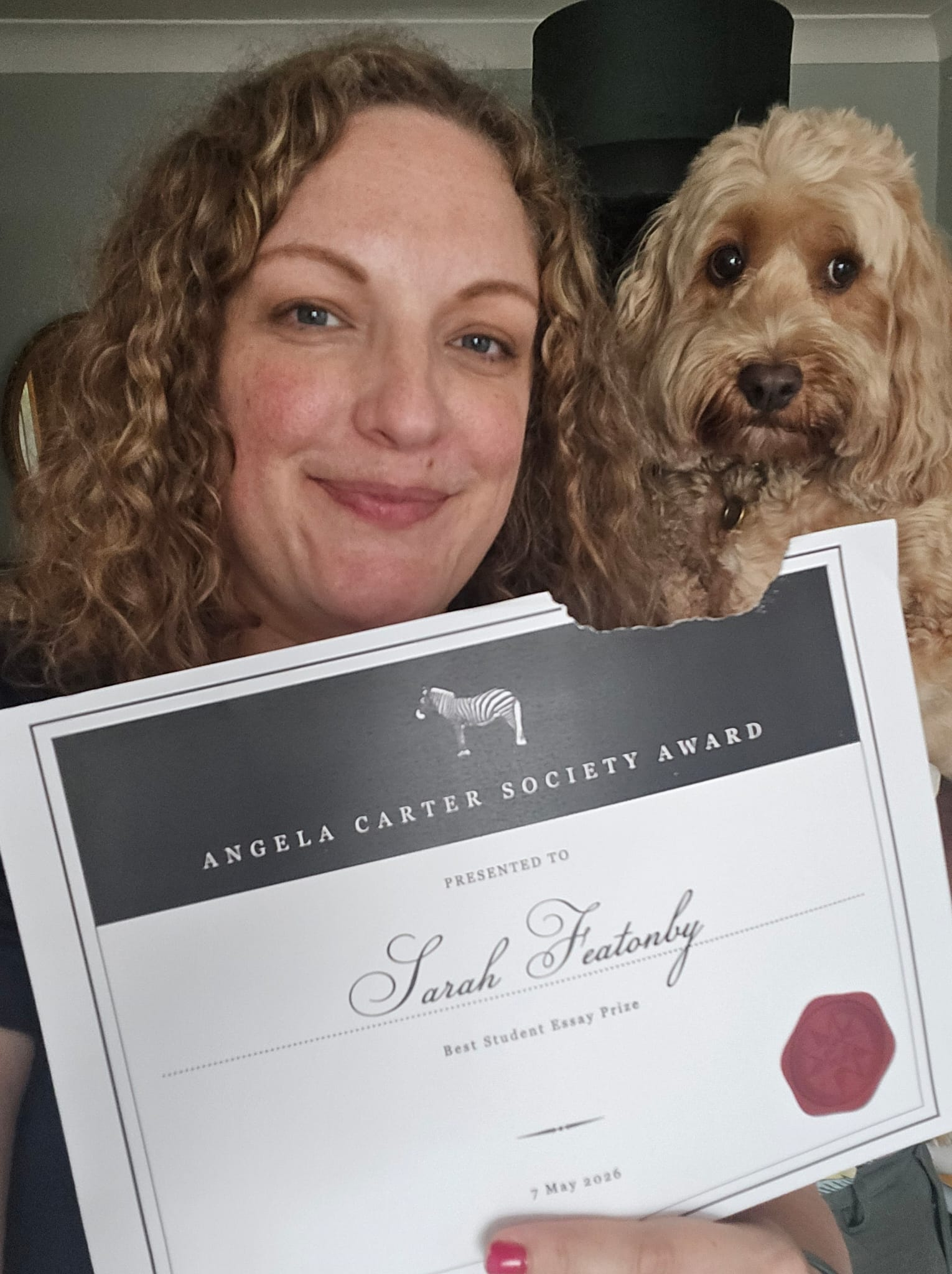
The judges praised Sarah Featonby’s essay for its exploration of a neglected aspect of Carter’s career, namely her dealings with her publishers such as Virago through which she challenged “the pinstripe jungle”. The importance of female networks and a solidarity of sisterhood proved to be a key component of Carter’s success in the male-dominated publishing world, apart from such notable exceptions as Virgina and Leonard Woolf’s Hogarth Press. Sarah explores little-known archival material and Carter’s correspondence and relationship with her publishers, particularly Carmen Callil, the founder of Virago Press, to conclude on the resounding note that there are no fairy godmothers, only material sisters.
If you are interested in submitting your Angela Carter Society for the 2028 Awards, please have a look at the Call here.